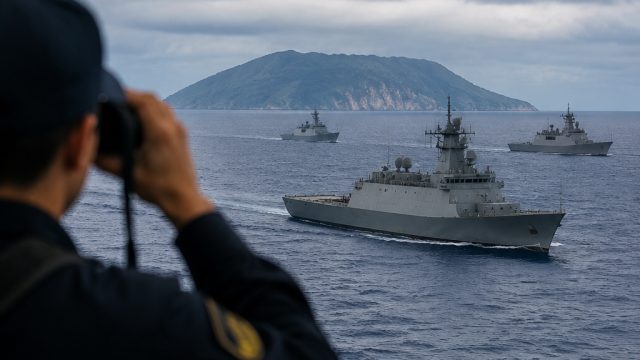
Recent developments in the Taiwan Strait have sparked heightened concerns among major global powers, including the United States, United Kingdom, France, and Germany. As Chinese naval patrols grow in frequency and intensity, the implications for international security and trade routes are becoming increasingly significant. Understanding the current landscape and the responses from Western nations is essential for businesses and stakeholders involved in industrial machinery export and other global trades.
The presence of Chinese military vessels near Taiwan has been described as assertive, with the People’s Liberation Army (PLA) intensifying its naval exercises. These patrols are viewed not only as a show of force but also as a strategic maneuver to assert China’s claims over the waters surrounding Taiwan.
In response to these activities, the United States and its allies have voiced their discontent. The U.S. State Department issued a formal statement condemning the increased Chinese naval presence, emphasizing the importance of maintaining peace and stability in the Taiwan Strait. Similarly, officials from the UK, France, and Germany have echoed these sentiments, highlighting the potential disruptions to international shipping routes, which are vital for global trade.
The military maneuvers in the Taiwan Strait have raised questions about the reliability of shipping routes that are crucial for the industrial machinery sector and beyond. A sustained increase in tensions could lead to interruptions in supply chains, particularly for businesses relying on exports from East Asia.
For companies involved in industrial machinery exports, staying informed about these developments is crucial. The volatility in the region could impact trade flows and create uncertainties in logistics and supply chain management. Monitoring key developments will help businesses navigate potential challenges effectively.
In light of these maritime tensions, the role of international diplomacy has become even more critical. The United Nations and other international organizations are encouraged to facilitate dialogue and establish frameworks for conflict resolution. It is imperative for global leaders to come together to mitigate risks that could escalate into larger conflicts.
As nations around the world respond to these tensions, collaborative efforts will be essential. Trade agreements, military alliances, and diplomatic negotiations will play a significant role in ensuring that tensions in the Taiwan Strait do not spill over into broader conflicts.
The situation in the Taiwan Strait remains fluid and requires careful monitoring. The intensified Chinese naval patrols pose significant implications for international relations, trade, and security. For businesses in the industrial machinery export sector, staying informed and prepared is crucial to navigate potential disruptions. As the global community responds to these developments, fostering diplomacy and cooperation will be paramount in maintaining peace in the region.
Contact
Stay updated with our latest product releases and news articles. XX Industrial Equipment Co., Ltd. is an emerging enterprise specializing in environmental protection... How can we help you?
Click below — we are happy to help. Contact